
Most factories and warehouses are sitting on their largest unused asset. A warehouse roof is flat, unshaded, structurally sound and completely idle. Put a solar array on it and it becomes a power plant that happens to also keep the rain out.
One of the clearest examples in our portfolio is the rooftop system we installed for Maxims Holdings at their facility on Old Road, Mulleriyawa. It is worth walking through, because the numbers explain why industrial rooftops are the easiest energy decision most manufacturers will make this decade.

The system in numbers
- 640 kWp of installed capacity on the warehouse roof of a 4.5 acre site.
- Around 880 MWh of electricity a year, generated where it is consumed.
- Roughly 627 tonnes of carbon dioxide avoided annually, compared with the same electricity drawn from the grid.
- Zero additional land required, and no change to the operations below the roof.
That last point is the one finance directors tend to notice. A ground mounted plant of the same size needs two to three acres of usable land. On a rooftop, the land cost is already paid, the security fence already exists, and the connection to the building’s main distribution board is a short run rather than a kilometre of cable.
Why self consumption beats export
The electricity a rooftop system produces is worth different amounts depending on where it goes. A unit consumed inside the building replaces a unit you would have bought at the industrial tariff. A unit exported to the grid earns the buy back rate, which is lower.
This is why the shape of your load curve matters more than the size of your roof. A warehouse running chillers, compressors, conveyors and lighting through the working day has demand that lines up almost perfectly with the midday generation peak. Very little of what the array produces needs to leave the site at all.
Before designing any industrial system, we ask for twelve months of bills and, where available, half hourly demand data. A plant that draws 300 kW steadily from 8am to 5pm is a very different design problem from one that draws 900 kW in two short bursts. Sizing to the overlap between generation and demand, rather than to the available roof area, is what protects the return.
What to check before you commit a roof
Structure. A modern steel portal frame usually carries a solar array comfortably, since panels and mounting add roughly 12 to 15 kg per square metre. Older asbestos sheeting, corroded purlins or roofs already loaded with plant need a structural assessment first, not after the order is placed.
Sheet condition and remaining life. Panels last twenty five years. If the roof sheets have five years left, plan the replacement before installation, not after. Removing and reinstalling an array to re sheet a roof is pure cost.
Penetrations and waterproofing. Every fixing through a roof sheet is a potential leak in ten years. Non penetrative clamp systems on standing seam roofs, correct sealing on trapezoidal sheets, and a workmanship warranty that explicitly covers water ingress are all worth insisting on.
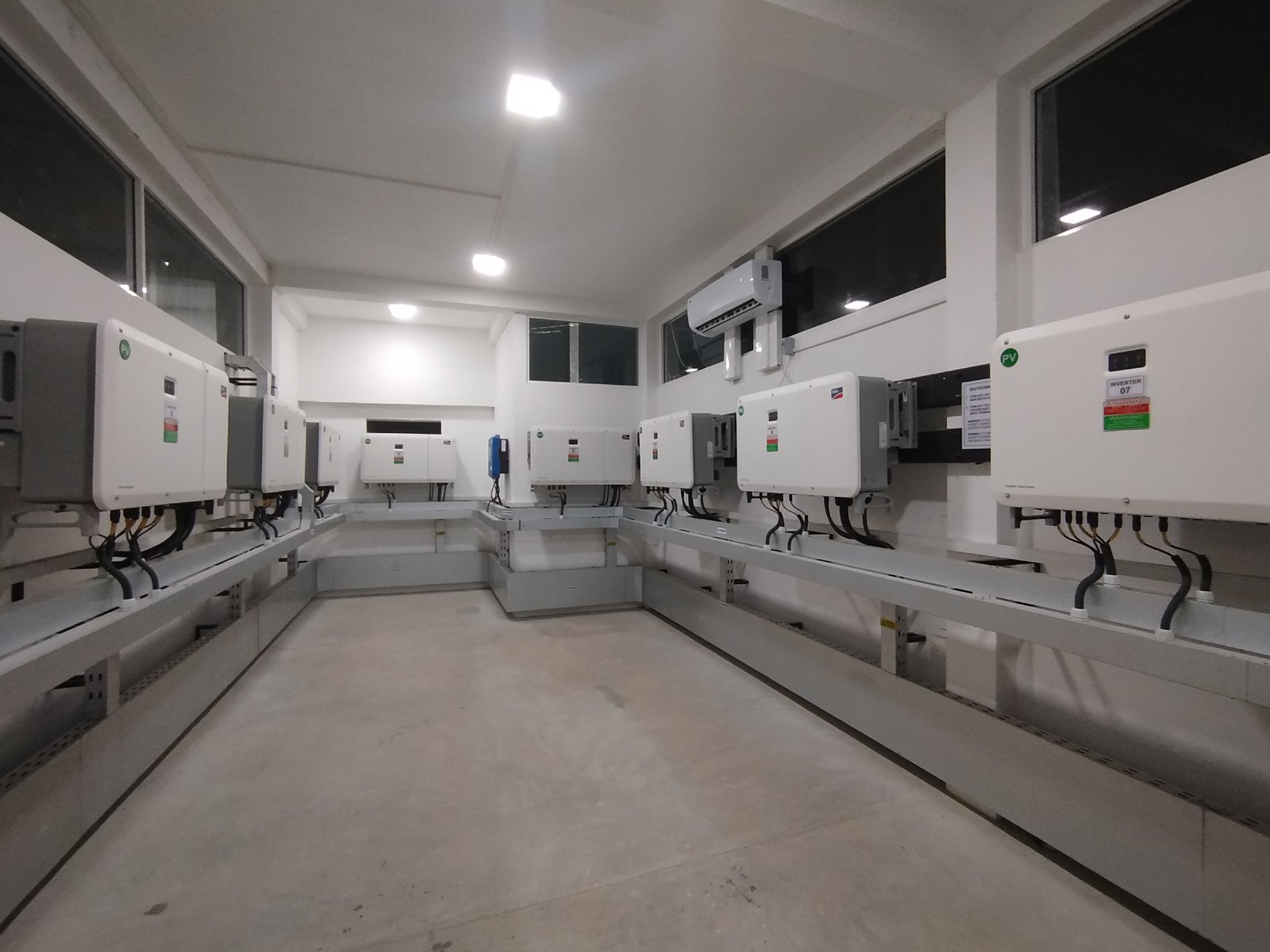
Fire safety and isolation. Clear DC isolation, labelled cable routes, and walkways that leave access for maintenance and for the fire service are basic requirements on an occupied industrial building.
Phased expansion. Maxims planned a second warehouse phase, taking the facility towards 140,000 square feet in total. Designing the first array with spare inverter capacity and cable routes for the next roof avoids paying twice for the same infrastructure.
The context
Sri Lanka has set a course towards a majority renewable electricity system, with rooftop generation from commercial and industrial buildings expected to carry a meaningful share of it. For an individual business, though, the national target is not the reason to install. The reason is a predictable electricity cost for the next twenty years on a roof that is currently earning nothing.
If you run a factory, warehouse or cold store and want to know what your roof could produce, send us twelve months of bills and we will model it.
Sources: The Sunday Times Business Times, “Maxims Holdings transforms warehouse rooftop into solar” · First Energy project records